
Noise exposure is the most common cause of hearing loss, yet only eight percent of adults wear hearing protection consistently. That’s why we believe taking care of your hearing should feel like a natural part of your day. We offer a selection of products designed to block out excessive noise while keeping you connected to your environment. Whether you are navigating noisy city streets, watching your favorite live band or enjoying your hobbies, there is a hearing product for your needs.
Who Should Consider Hearing Protection?
We live in a noisy world, which means anyone can benefit from hearing protection. Things like lawnmowers, motorcycles, chainsaws, concerts, gunshots and jet engines are examples of sounds that can become dangerous with extended exposure. Sounds at or above 85 decibels (dBA) are considered potentially harmful if you are exposed for long periods, and the risk increases as the volume goes up. That means even everyday tools or events, like motorcycles, concerts or power equipment, can reach levels where your ears need protection. Wearing properly fitted hearing protection can lower the impact of loud sounds by as much as 30 dBA, reducing the chance of lasting problems like tinnitus or permanent hearing loss.
| Sound | Sound Level | Maximum Safe Exposure |
|---|---|---|
| City traffic | (85 dBA) | 8 hours |
| Gas-powered lawn mower | (90 dBA) | 2 hours |
| Motorcycle | (95 dBA) | 1 hour |
| Hand drill | (100 dBA) | 15 minutes |
| Chainsaw | (105 dBA) | 5 minutes |
| Car horn at close range | (110 dBA) | Less than 2 minutes |
| Live concert | (115 dBA) | About 30 seconds |
| Fireworks or gunshot | (120–140 dBA) | Immediate risk, avoid exposure |
Preventing Hearing Loss Caused by Noise
Noise-induced hearing loss (NIHL) is one of the most common but also one of the most preventable causes of hearing problems. The good news is that a few simple habits can make a big difference in protecting your hearing:
- Turn it down: This is the easiest solution if you control the source of the noise. When you’re listening to music or television through earbuds, reduce the volume to the lowest level you can comfortably hear.
- Protect your ears: Wear hearing protection when you mow, blow leaves, go to a concert, use a chainsaw or hunt. If your employer provides hearing protection, follow the recommended guidelines.
- Create distance from the sound source: Keep away from the loudspeakers when you’re dancing at a club. Sit higher up in the stands when you’re at the motorway.
- Limit exposure time: If your ears start buzzing or you feel drained from talking over background noise, give yourself a break. Step outside, end the outing earlier or take your scheduled breaks at work to let your ears recover.
These small changes don’t take much effort, but they can go a long way toward keeping your hearing strong and healthy.
Choosing Hearing Protection Products
These days, hearing protection products are available in a wide variety of styles with different features and technology. There are many things to consider when you choose a product, such as size and comfort, ease of use, how much sound will be reduced and whether you will need a solution that allows you to be physically active while they’re in place. You should also consider how well they let you stay aware of important sounds around you while still being able to communicate with others.
Over-the-Counter Options for Hearing Protection
The most common hearing protection options you can purchase over the counter are foam earplugs, pre-molded earplugs and earmuffs.
Foam Earplugs
Traditional foam earplugs require some skill to insert properly since they must be rolled in as small of a compact cylinder as possible before they are inserted into your ears. When worn correctly, traditional foam earplugs tend to be the most comfortable and effective style of earplug, providing noise reduction that rivals high-attentation earmuffs. You can also find push-to-fit foam earplugs, which are easier to use than traditional foam since they do not require being rolled before inserting them into your ears. Foam earplugs are intended to be single-use products and should be thrown away after being worn.
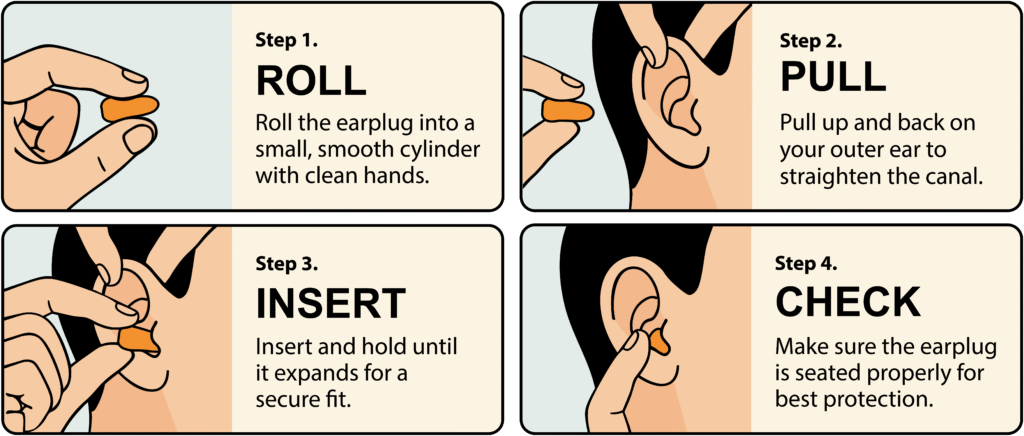
A properly inserted earplug is essential for maximizing noise reduction and providing protection. To correctly insert a foam earplug, first, roll the earplug into a small, thin cylinder using clean hands. Next, gently pull up and back on the outer ear to straighten the ear canal, which allows for deeper insertion. While holding the ear straight, insert the compressed earplug into the canal and hold it there with your finger until it fully expands and creates a secure seal. Finally, check that the earplug is seated properly for the best fit and protection.
Pre-molded earplugs
Pre-molded earplugs are made of an elastic material that can be washed and reused. Although they can seal well, they tend to be somewhat less comfortable and less protective than foam earplugs. They typically cannot be inserted as deeply as foam earplugs without causing discomfort and may need to be adjusted periodically to maintain a proper seal in the ear canal.
Earmuffs
Earmuffs are easy to put on and take off, making them a good choice for short bursts of noise. They can be worn over earplugs for extra protection and provide warmth during outdoor chores or yard work. They are also a great option for children, coming in smaller sizes and comfortable designs that can be worn repeatedly.
Customized Options for Hearing Protection
A personalized option can provide greater comfort and effectiveness based on your needs. When disposable earplugs don’t fit securely or feel comfortable, custom earmolds can be a practical alternative.
Custom hearing protection is built from earmold impressions of your unique ear anatomy, ensuring a snug fit and optimal performance. Full-shell earmolds are generally used for high-level noise exposure, while half-shells address mid-level noise exposure. Some earmolds come with a filtered attenuator that makes communication easier while wearing the devices. This feature is popular with musicians and others who need to hear their surroundings while working in noisy environments.
Specialized Hearing Protection
Specialized earplugs are available for musicians, hunters, motorcyclists, swimmers and people in noisy occupations. Each type of solution is unique; for example, hearing protection for hunters is designed to reduce sudden high-level noise instead of sustained noisy conditions, while hearing protection for musicians preserves pitch relationships as it reduces the overall level of sound.
Custom-fit specialty earplugs are more economical and more comfortable than disposable options because they’re molded to your ear, providing a secure fit that blocks sound more effectively and feels better during long wear. Unlike foam plugs that can lose their seal or need frequent replacement, custom plugs maintain their protection and last for years, making them a smarter long-term choice.
We Can Help!
If you would like to learn more about our personalized hearing protection solutions, schedule an appointment with one of our providers today. We’ll take the time to understand your needs, explain your options and help you find protection that keeps your hearing safe without sacrificing comfort.